
Servicing All Areas Around Brisbane, Gold Coast and Northern New South Wales
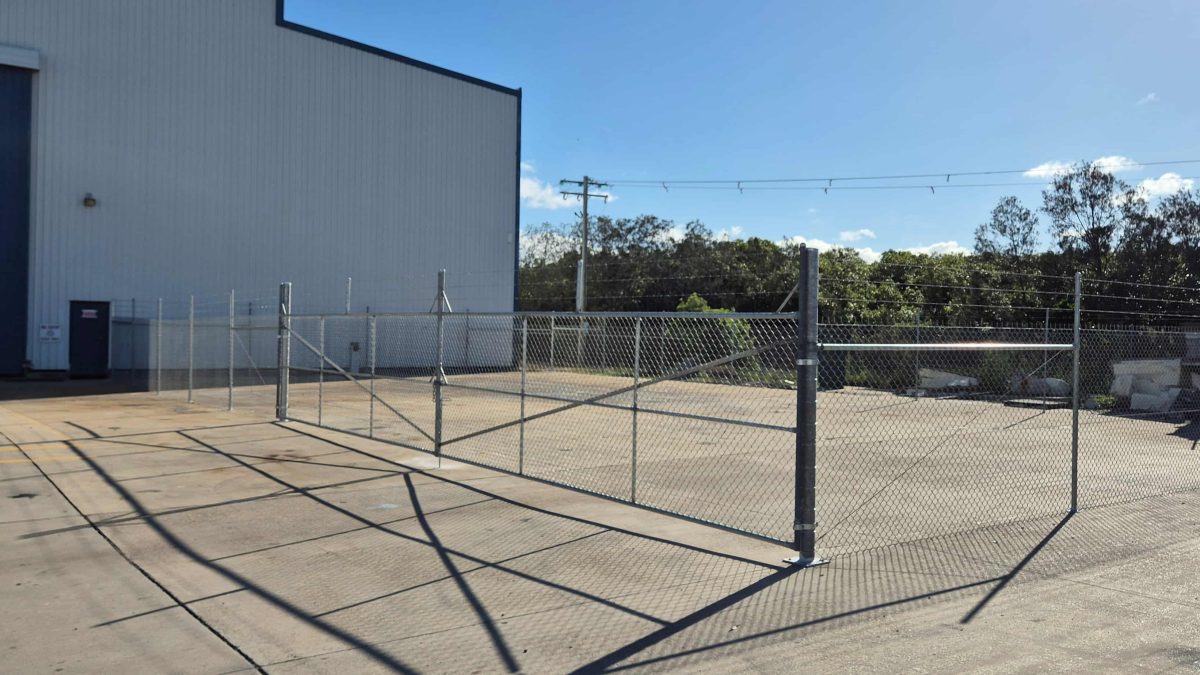
Security fencing only works when it is designed around how a business actually operates. The difference between a fence that performs properly and one that becomes a problem usually comes down to decisions made before installation even begins.
Across Brisbane and the Gold Coast, commercial and industrial sites vary significantly. A warehouse yard, a roadside boundary, and a storage yard all have different requirements. The fencing needs to reflect that from the start, otherwise it creates access issues, weak points, or ongoing maintenance problems resulting in the need for fencing repairs.
This article explains how security fencing is designed in real-world conditions, the factors that influence the final setup, and what needs to be considered to get it right.
For an overview of available systems and applications, see our security fencing service page or our updates page to see recent projects we have completed in Brisbane and the Gold Coast.
Before selecting any materials, the purpose of the fence must be clearly outlined.
On most sites, security fencing is used to:
Each of these requires a different approach. Treating all security fencing the same leads to poorer outcomes.
The layout of the site is the starting point for every fencing project.
Two sites of the same size can require completely different setups depending on how they are used. The position of entry areas, vehicle movement, and working areas all influence where the fence runs and how it is configured.
Key factors include:
If fencing is set out without considering these elements, it often leads to restricted access, poorly positioned gates, areas that impact workflow, or sections that are difficult to secure.
Fence height is directly tied to the level of security required.
Lower fences are generally used for boundary fencing, while higher fences are used where access needs to be restricted or deterred. In higher-risk environments, increased height combined with additional features improves effectiveness.
Height alone does not determine security, but it plays a role in how difficult the fence is to climb and how well other features perform.
Chain wire fencing is commonly used for security fencing due to its strength and versatility, but not all chain wire is the same.
The key variables are:
The structural strength of a fence comes from the posts and how they are installed.
Ground conditions determine how posts are set:
If posts are not set correctly, the fence will shift over time. This leads to leaning sections, loose wire, and gates that may no longer function correctly.
Correct tensioning is essential in chain wire fencing.
The wire must be strained to maintain a straight, consistent line. If this is not done properly, the fence will sag, lose strength, and require ongoing adjustment.
Tensioning is not just a finishing step. It is an important part of the installation that determines how the fence performs over time.
Barbed wire is commonly added to increase the effectiveness of security fencing.
It acts as both a physical barrier and a deterrent. It is typically installed in three strands along the top of the fence using extensions that position it above the top line of the fencing.
Consistency is important. Uneven spacing or poorly installed strands reduce its effectiveness and can create weak points.
Chain wire gates are one of the most critical parts of any security fencing system.
They are also the most frequently used, which means they need to be designed and installed properly.
Gate openings need to be based on actual use. Vehicle types, turning space, and frequency of use all need to be considered. It is not uncommon for double swing gates to be in excess of 8 meters wide for vehicles.
Posts must be capable of supporting weight load of the gate, and hardware or fittings must be suitable to attach a gate frame to. Clearance must be allowed to prevent binding or contact with the ground.
Poor gate setup is one of the most common causes of ongoing issues.
Not all security fencing is used for external boundaries.
Internal fencing is often required to:
Internal fencing is designed differently. It often prioritises movement and access rather than full perimeter security.
Problems with security fencing are usually the result of poor planning or installation.
Common issues include:
These issues can either develop after in ineffective installation or can develop over time with general wear and tear. It is not uncommon for fencing contractors to attend another fencers installation to correct errors.
Many fencing projects are completed while sites remain operational.
This requires:
This affects both the design and installation process. Planning for this early helps avoid delays and complications.
Conditions vary between Brisbane and the Gold Coast.
Coastal areas experience higher exposure to moisture and salt, which increases the risk of corrosion. Material selection needs to account for this and PVC coated chain wire is a popular option.
Inland areas may not require the same level of protection, but durability is still important.
Security fencing costs vary depending on several factors:
Each site is different, so costs are determined by the specific requirements of the project.
A properly designed fence should continue to perform over time without the need for constant adjustments.
A few recommendations from Apollo Fencing to choose the right installer for your fence
Planning for future use, including changes to the site or increased demand, helps avoid the need for major changes later.
Security fencing across Brisbane, the Gold Coast, and Yatala needs to be designed to suit real business demands.
There is no single setup that works for every site. Each project requires a practical approach based on how the area is used, what needs to be protected, and how access is managed.
Based in Yatala, Apollo Fencing delivers secure fencing options to Brisbane, the Gold Coast and Northern NSW.
For more information, view our security fencing service page or contact us to have a chat with a member of our team.